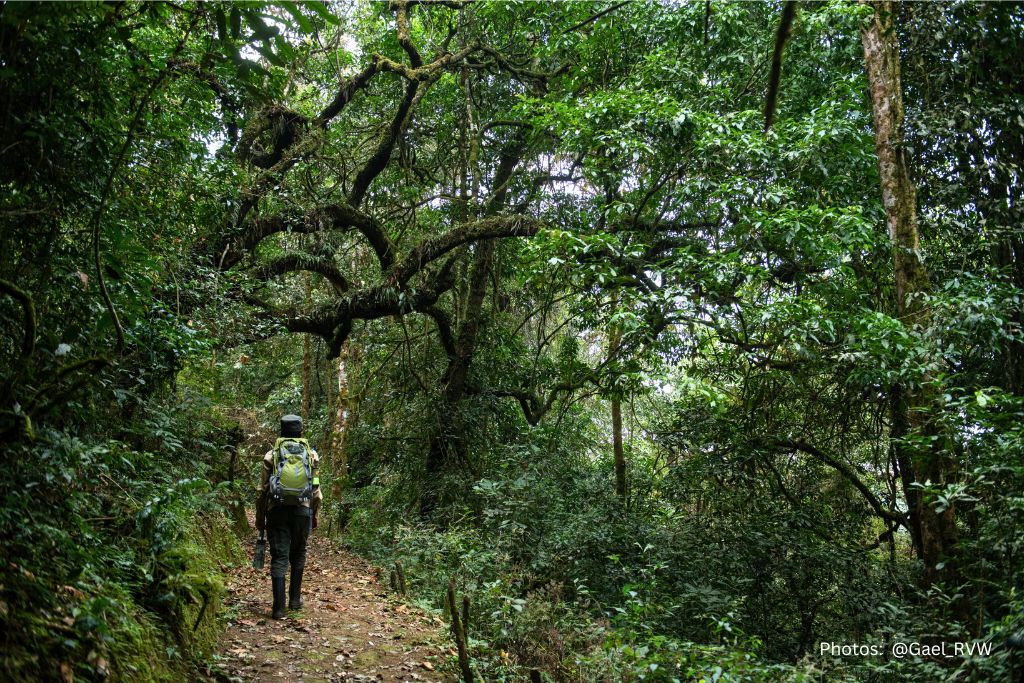
Nyungwe Forest National Park is Rwanda’s largest and most ancient protected area, covering 1,019 square kilometers of pristine montane rainforest in the southwestern corner of the country. This magnificent forest is estimated to be over 10,000 years old, making it one of the best-preserved montane rainforests in Central and East Africa. Nyungwe serves as a vital water catchment area for Rwanda, with its streams and rivers forming the origins of both the Nile and Congo River basins, earning it the nickname “the water tower of Africa.”
What makes Nyungwe truly exceptional is its incredible biodiversity packed into a relatively compact area. The forest represents the largest remaining tract of montane rainforest in East Africa and is home to an astonishing 13 primate species, including a significant population of chimpanzees and the rare and endemic L’Hoest’s monkey. Nyungwe’s elevation ranges from 1,600 to 2,950 meters above sea level, creating diverse habitats that support over 310 bird species, 85 mammal species, 120 reptile and amphibian species, and more than 1,068 plant species, including 200 orchid varieties.
Nyungwe Forest National Park gained international recognition in 2005 when it was designated as a national park, but its conservation significance extends far beyond Rwanda’s borders. The forest forms part of the Albertine Rift, one of the most biodiverse regions on Earth and home to numerous endemic species found nowhere else. For visitors seeking an authentic rainforest experience combined with world-class primate viewing and the unique thrill of Africa’s highest canopy walkway, Nyungwe offers an unparalleled adventure that combines excitement, education, and profound connection with nature.
Primates and Biodiversity
Chimpanzees: Our Closest Relatives
Nyungwe Forest is home to approximately 320 chimpanzees, representing one of the most accessible populations for tourism in East Africa. With a genetic similarity of 98.7% to humans, chimpanzees exhibit complex social behaviors, tool use, and emotional intelligence that provide profound insights into human evolution. The park hosts several habituated chimpanzee communities that are accessible to tourists, with the Uwinka and Kitabi areas being the primary tracking sites.
Chimpanzee tracking in Nyungwe offers exceptional opportunities to observe these intelligent creatures in their natural habitat. Unlike mountain gorillas that tend to stay on the ground, chimpanzees are highly arboreal and often move quickly through the forest canopy, making tracking both challenging and exhilarating. The experience of hearing their distinctive pant-hoots echoing through the forest and watching them interact socially is unforgettable.
Diverse Primate Community
Beyond chimpanzees, Nyungwe boasts an impressive array of 12 other primate species, making it one of Africa’s most primate-diverse forests. The endangered L’Hoest’s monkey, with its distinctive white beard and chestnut back, is endemic to the Albertine Rift region and represents one of Nyungwe’s conservation priorities. The rare Angola colobus monkey is particularly famous in Nyungwe for forming some of the largest troops ever recorded, sometimes numbering over 400 individuals.
Other notable primates include the black-and-white colobus monkeys, easily spotted by their long white tails and dramatic leaps through the canopy; red-tailed monkeys with their vibrant fur; blue monkeys; grey-cheeked mangabeys; and the elusive nocturnal potto. The park also hosts two species of galagos (bushbabies) and the distinctive owl-faced monkey, another Albertine Rift endemic.
The combination of accessible chimpanzee tracking and the opportunity to see such a diverse array of other primates makes Nyungwe a paradise for primatologists, wildlife enthusiasts, and photographers interested in primate behavior and ecology.
Bird Paradise and Other Wildlife
Nyungwe Forest is a paradise for bird watchers, with over 310 recorded species including 29 that are endemic to the Albertine Rift region. Notable species include the striking Rwenzori turaco, the colorful red-collared mountain babbler, the rare Grauer’s swamp warbler, and the magnificent great blue turaco. The forest’s diverse habitats—from dense understory to emergent canopy—create ideal conditions for observing specialized forest birds that are rarely seen elsewhere.
While primates dominate the wildlife experience, Nyungwe also harbors forest elephants, buffaloes, leopards, and various antelope species including the elusive bushbuck and duiker. However, these larger mammals are more secretive and less commonly seen by visitors compared to the abundant primates and birds. The forest’s amphibian and reptile diversity is equally impressive, with numerous endemic species adapted to the cool, moist montane environment.
Activities and Experiences
Chimpanzee Tracking
Chimpanzee tracking is Nyungwe’s most popular activity and offers one of the best opportunities in East Africa to observe these intelligent primates in their natural habitat. The experience begins early in the morning with a briefing at the Uwinka or Kitabi visitor center, where visitors are assigned to specific chimpanzee communities based on group size and fitness levels. Each tracking group is limited to eight people to minimize disturbance to the chimpanzees.
The tracking itself can last anywhere from 1 to 6 hours, depending on the location and movement patterns of the assigned chimpanzee community. Your experienced guide and trackers will lead you through the forest, following subtle signs like broken branches, chimpanzee nests, and vocalizations to locate the group. The terrain varies from gentle forest paths to steeper inclines, and the dense vegetation creates a true rainforest atmosphere at elevations between 1,800 and 2,500 meters.
When you finally encounter the chimpanzees, the experience is often described as life-changing. Watching these intelligent creatures interact—mothers caring for their infants, adolescents playing, adults foraging and grooming—provides deep insights into their complex social structures. The one-hour observation period allows ample time for photography and quiet contemplation of our closest living relatives in their natural environment.
Canopy Walkway
Nyungwe’s canopy walkway is Africa’s highest, suspended 60 meters above the forest floor and stretching 200 meters through the treetops. This unique experience offers breathtaking views of the forest canopy and excellent opportunities to observe birds, butterflies, and arboreal mammals like monkeys that are rarely seen from the forest floor. The walkway consists of suspension bridges and observation platforms that provide safe and stable viewing platforms high in the emergent tree layer.
The canopy walk is accessible to most visitors and takes approximately 2-3 hours round trip, including the hike to the walkway entrance. Early morning visits offer the best chances to see wildlife activity in the canopy, while afternoon visits provide dramatic lighting for photography. The experience of walking among the treetops, with the forest stretching endlessly below and the calls of birds and monkeys echoing through the canopy, is truly unforgettable.
Nature Trails and Hiking
Nyungwe offers an extensive network of 13 well-maintained nature trails that cater to different interests and fitness levels. The Igishigishigi Trail is the most popular, leading to the canopy walkway and offering excellent primate viewing opportunities. The Kamiranzovu Trail passes through marshland and provides opportunities to see rare birds and the elusive sitatunga antelope.
The Congo-Nile Trail is a longer hiking option that follows the ridge between the Congo and Nile River basins, offering panoramic views of the forest and surrounding tea plantations. The Umusambi Trail leads to a sacred forest area with cultural significance to local communities. Each trail provides unique perspectives on Nyungwe’s diverse ecosystems and wildlife, with experienced guides providing educational commentary on forest ecology, medicinal plants, and conservation efforts.
Cultural and Community Experiences
Nyungwe Forest is surrounded by vibrant local communities, primarily the Bakiga and Batwa peoples, who have deep historical and cultural connections to these forests. Several community tourism initiatives offer authentic cultural experiences that support local livelihoods while preserving traditional knowledge. The Buhoro Batwa Cultural Experience provides rare opportunities to learn about Batwa forest wisdom, traditional hunting techniques, and medicinal plant knowledge from the original inhabitants of these forests.
Revenue sharing from tourism has transformed local attitudes toward conservation. A portion of park fees is allocated directly to community development projects, funding schools, healthcare facilities, and infrastructure improvements. This approach ensures that local people benefit directly from conservation efforts, creating strong incentives for protecting the forest while preserving cultural heritage for future generations.
Conservation and Research
Nyungwe Forest National Park represents one of Africa’s most important conservation areas and has been the site of extensive primatological and ecological research for decades. The forest’s long-term protection status, dating back to 1933 when it was first designated as a forest reserve, has allowed its ecosystems to remain relatively intact compared to other forests in the region. This continuity has provided invaluable opportunities for scientific research and long-term ecological monitoring.
Conservation efforts in Nyungwe focus on protecting the forest’s biodiversity while supporting sustainable development for surrounding communities. The park employs hundreds of rangers who provide daily protection against illegal activities like poaching and timber harvesting. Community-based conservation initiatives have been particularly successful, with local people now serving as forest guardians and benefiting directly from tourism revenue through the government’s revenue-sharing program.
Nyungwe also serves as a crucial wildlife corridor, connecting with other protected areas in the Albertine Rift and allowing for genetic exchange between populations. The forest’s role as a water catchment area makes its conservation vital not just for biodiversity but for Rwanda’s water security and agricultural productivity. Climate change poses ongoing challenges, but adaptive management strategies and community engagement continue to demonstrate that conservation and human development can go hand in hand.
Best Time to Visit
Dry Seasons (Recommended)
June to September and December to February offer the best conditions for chimpanzee tracking and canopy walks. Trails are less muddy and slippery, making hiking easier and safer. The dry conditions also mean better visibility through the forest canopy and less dense vegetation. These periods coincide with European summer holidays and Christmas/New Year, so expect higher prices and more visitors.
Wet Seasons (Green Season)
March to May and October to November bring lush vegetation, abundant fruit for primates, and fewer tourists. The forest is at its most verdant and beautiful during these months, and bird watching is exceptional with migratory species present. While trails can be muddy and slippery, making tracking more challenging, accommodation rates are typically lower and permits may be easier to secure.
Related Attractions

Ruaha National Park
Ruaha National Park is Tanzania’s largest national park and one of Africa’s most authentic wilderness experiences, covering a vast 20,226 square kilometers of pristine landscapes in central Tanzania. Located approximately…

Selous Game Reserve
Selous Game Reserve is Africa’s largest game reserve and one of the continent’s most pristine wilderness areas, covering a staggering 54,600 square kilometers—larger than Switzerland and nearly four times the…
Customer Reviews
Share Your Experience
No reviews yet. Be the first to share your experience!