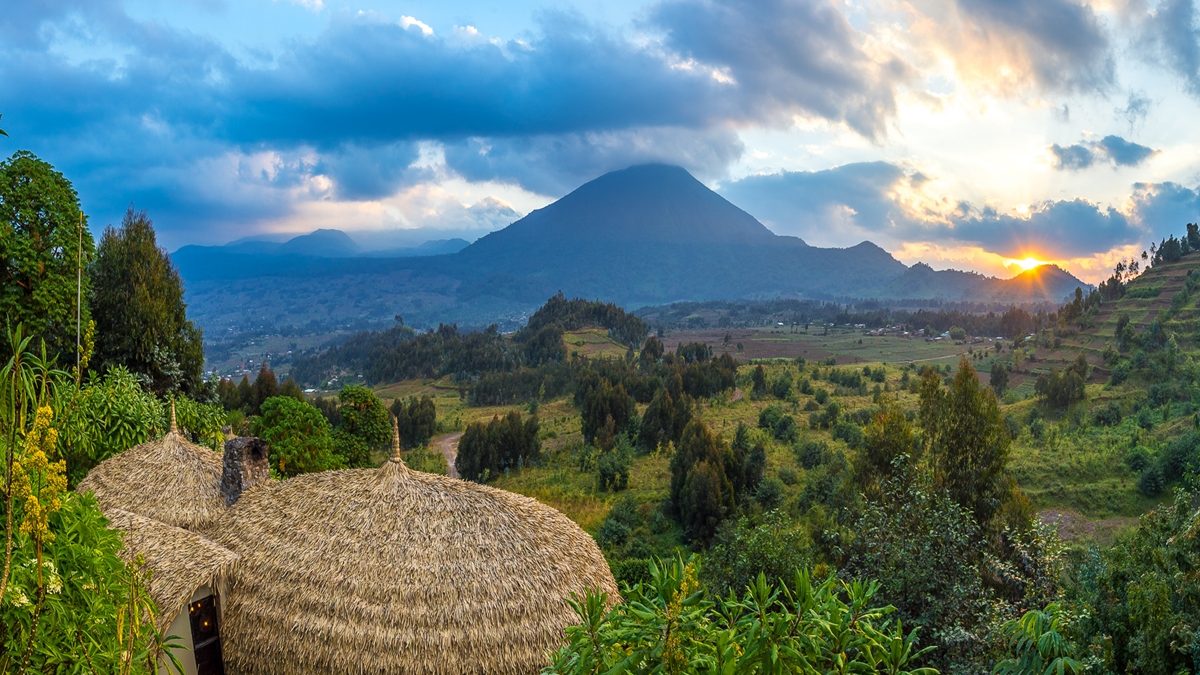
Volcanoes National Park is Rwanda’s most famous and iconic protected area, renowned worldwide as one of the best places on Earth to observe endangered mountain gorillas in their natural habitat. Located in the northwestern corner of Rwanda, bordering Uganda’s Mgahinga Gorilla National Park and the Democratic Republic of Congo’s Virunga National Park, this magnificent park forms part of the larger Virunga Massif—a chain of eight volcanic mountains that straddle the three countries. The park covers 160 square kilometers of dense montane forest, bamboo zones, and dramatic volcanic landscapes that rise to elevations of over 4,000 meters.
What makes Volcanoes National Park truly exceptional is its conservation success story and the intimate gorilla trekking experiences it offers. In the 1980s, mountain gorillas were on the brink of extinction with fewer than 250 individuals remaining in the Virunga Massif. Today, thanks to intensive conservation efforts and community-based tourism initiatives, their numbers have more than doubled to over 600 individuals. This remarkable recovery represents one of Africa’s greatest conservation achievements and demonstrates the power of dedicated protection and sustainable tourism.
The park is also deeply connected to the legacy of Dr. Dian Fossey, the pioneering primatologist who established the Karisoke Research Center in 1967 and dedicated her life to studying and protecting mountain gorillas. Her groundbreaking work, documented in the book and film “Gorillas in the Mist,” brought international attention to the plight of these gentle giants and inspired generations of conservationists. Today, visitors can pay their respects at her gravesite, located near the Karisoke Research Center within the park boundaries.
Mountain Gorillas
Endangered Gentle Giants
Mountain gorillas (Gorilla beringei beringei) are one of the most endangered primates in the world, with only around 1,063 individuals remaining globally across two isolated populations—the Virunga Massif and Uganda’s Bwindi Impenetrable Forest. These magnificent creatures share approximately 98% of their DNA with humans, making encounters with them deeply moving and educational experiences that provide profound insights into our own evolutionary history.
Adult male mountain gorillas, known as silverbacks due to the distinctive silver patch that develops on their backs as they mature, can weigh up to 430 pounds and stand over 5 feet tall when upright. Despite their imposing size and strength, mountain gorillas are primarily herbivorous and remarkably gentle, spending most of their day foraging for vegetation, resting, and engaging in complex social interactions within their family groups.
Gorilla Families and Habituation
Volcanoes National Park is home to approximately 176 mountain gorillas distributed across several habituated family groups. Habituation is a careful, multi-year process that gradually accustoms gorillas to human presence while maintaining their natural behaviors and minimizing stress. Currently, the park has 10 habituated gorilla families available for tourism, with each family allocated to different trekking sectors based on location and group dynamics.
Each gorilla family is led by a dominant silverback who protects the group and makes decisions about movement and feeding. Family sizes range from 10 to 30 individuals, including adult females, juveniles, and infants. The complex social structures, emotional bonds, and individual personalities of these gorillas create unique and unforgettable encounters for visitors fortunate enough to spend time with them.
Conservation Success Story
The recovery of mountain gorillas in Volcanoes National Park represents one of the most successful conservation stories in Africa. From fewer than 250 individuals in the 1980s to over 600 today in the Virunga Massif, this population growth is attributed to intensive protection efforts, veterinary care, community engagement, and sustainable tourism. Revenue from gorilla trekking permits plays a crucial role, with 10% allocated directly to local communities for development projects, creating strong incentives for conservation.
The park employs hundreds of rangers who provide daily protection against poaching and habitat encroachment, while veterinary teams monitor gorilla health and provide emergency medical care when needed. This comprehensive approach, combined with international support and local community involvement, has transformed mountain gorillas from a species on the brink of extinction to a conservation flagship that continues to inspire hope for other endangered species.
The Trekking Experience
The Gorilla Trek
Gorilla trekking in Volcanoes National Park is an adventure that combines physical challenge with unparalleled rewards. The experience begins early in the morning (7:00 AM) with a briefing at the Kinigi park headquarters, where visitors are assigned to specific gorilla families based on fitness levels, age, and preferences. Each trekking group is limited to eight people to minimize disturbance to the gorillas and ensure intimate viewing experiences.
The trek itself can last anywhere from 30 minutes to 4 hours, depending on the location and recent movements of the assigned gorilla family. Your experienced guide and trackers will lead you through the forest, following subtle signs like broken vegetation, gorilla nests, and vocalizations to locate the group. The terrain varies from gentle forest paths to steeper inclines, and the dense vegetation creates a true montane forest atmosphere at elevations between 2,400 and 3,800 meters.
When you finally encounter the gorillas, the experience is often described as life-changing. Watching these intelligent creatures interact—mothers caring for their infants, silverbacks displaying their dominance, juveniles playing—provides deep insights into their complex social structures. The one-hour observation period feels fleeting, but the memories and photographs last a lifetime.
Golden Monkey Tracking
In addition to mountain gorillas, Volcanoes National Park is home to another endangered primate: the golden monkey (Cercopithecus mitis kandti). This striking subspecies, endemic to the Virunga Massif, is characterized by its golden-orange fur and black legs. Golden monkey tracking offers a different but equally rewarding primate experience, with treks typically lasting 2-3 hours through bamboo forests and montane habitats.
Golden monkeys live in large, active troops of 30-100 individuals and are highly acrobatic, often leaping spectacularly between bamboo branches. Unlike the more sedentary gorillas, golden monkeys are constantly on the move, providing dynamic viewing opportunities and excellent photography challenges. The permit cost is significantly lower than gorilla permits, making it an accessible alternative or complement to gorilla trekking.
Other Activities and Experiences
Volcanoes National Park offers several other unique experiences beyond primate tracking. The Dian Fossey Tomb Hike is a 3-4 hour trek to the gravesite of the legendary primatologist and the remains of her Karisoke Research Center. This pilgrimage provides insights into her groundbreaking work and the history of gorilla conservation. The hike passes through beautiful montane forest and offers excellent bird watching opportunities.
For the more adventurous, climbing Mount Bisoke (3,711 meters) offers a challenging 6-7 hour round-trip hike with rewarding views of the crater lake at the summit and panoramic vistas of the entire Virunga Massif. Bird watching is also excellent throughout the park, with over 170 species recorded, including several Albertine Rift endemics like the Rwenzori turaco and Archer’s ground robin.
Cultural and Community Connections
Volcanoes National Park is surrounded by vibrant local communities, primarily the Bakiga and Batwa peoples, who have deep historical and cultural connections to these mountains. The Bakiga are renowned for their agricultural expertise and terraced farming on the volcanic slopes, while the Batwa are the indigenous forest-dwelling people who once lived in harmony with the gorillas before being relocated when the park was established.
Several community tourism initiatives offer authentic cultural experiences that support local livelihoods while preserving traditional knowledge. The Iby’Iwacu Cultural Village provides insights into traditional Bakiga life through dance performances, craft demonstrations, and storytelling. The Buhoro Batwa Cultural Experience offers rare opportunities to learn about Batwa forest wisdom, traditional hunting techniques, and medicinal plant knowledge from the original inhabitants of these forests.
Revenue sharing from tourism has transformed local attitudes toward conservation. Ten percent of gorilla permit fees are allocated directly to community development projects, funding schools, healthcare facilities, and infrastructure improvements. This approach ensures that local people benefit directly from conservation efforts, creating strong incentives for protecting the park and its wildlife while preserving cultural heritage for future generations.
Best Time to Visit
Dry Seasons (Recommended)
June to September and December to February offer the best conditions for gorilla trekking. Trails are less muddy and slippery, vegetation is less dense for better visibility, and the weather is generally more stable. These periods coincide with European summer holidays and Christmas/New Year, so expect higher prices and the need to book permits well in advance.
Wet Seasons (Value Season)
March to May and October to November bring lush vegetation, dramatic skies, and fewer tourists. The forest is at its most verdant and beautiful, and permit prices may be slightly lower. While trails can be muddy and slippery, making trekking more challenging, rain showers are typically brief and don’t last all day.
Related Attractions

Ruaha National Park
Ruaha National Park is Tanzania’s largest national park and one of Africa’s most authentic wilderness experiences, covering a vast 20,226 square kilometers of pristine landscapes in central Tanzania. Located approximately…

Selous Game Reserve
Selous Game Reserve is Africa’s largest game reserve and one of the continent’s most pristine wilderness areas, covering a staggering 54,600 square kilometers—larger than Switzerland and nearly four times the…
Customer Reviews
Share Your Experience
No reviews yet. Be the first to share your experience!